







Legendary Brands. Serious Performance.
For Tesla drivers who care about more than straight-line speed, you’re in good company. From sharper chassis response to stronger braking and smarter cooling, we focus on upgrades that work with Tesla’s unique electric platform. Start by choosing your exact vehicle to see what’s possible for your car’s next evolution.
Fast Delivery & UK Stock
Epic Reward Points
0% RACE NOW, PAY LATER™
Expert Advice & Workshop
Tesla owners are drawn to modification because the platform feels closer to consumer tech than traditional metal. There’s a natural urge to tweak software-like behaviour, sharpen responses and personalise the driving feel. Enthusiasts enjoy exploring how far the electric powertrain and chassis calibration can be pushed while keeping everyday usability, turning a clean, minimalist base into something that reflects their own priorities.
As long-term projects, Teslas appeal to people who like iterative progress rather than one big build. The cars evolve with updates and experimentation, inviting owners to refine the experience over time. That mindset fits well with enthusiasts who enjoy data, optimisation and subtle, thoughtful changes, focusing on balance, efficiency and control rather than purely chasing drama or noise.
Tesla owners tend to lean into the clean, minimalist look, so styling changes usually focus on sharpening what’s already there rather than shouting about it. Think of it as refining the car’s presence, tightening up the stance visually and giving it a more purposeful, planted attitude without spoiling the futuristic feel.
Many aim for a subtle contrast between sleek body lines and darker details, playing with gloss and satin finishes to give the car more depth. Small shifts in colour accents and textures can transform a Tesla from stock to something that quietly stands apart.
The goal is almost always the same: keep it recognisably Tesla, just with a more confident, personal edge.
Our latest Tesla-focused blog pieces explore how electric performance, chassis tuning and software updates intersect, offering grounded insight, engineering context and real-world learning for enthusiasts who want to understand the platform’s strengths and limitations before planning their next modifications.

















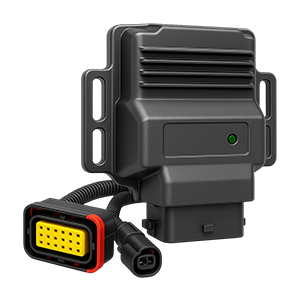
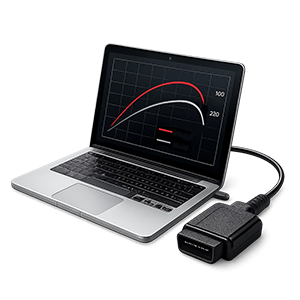
For Tesla, performance tuning is all about working with the electric platform rather than fighting it. Power delivery is already strong, so the focus often shifts to refining how that performance is used: sharpening responses, improving consistency under repeated hard use, and tailoring the driving feel to your own preferences.
Software-based optimisation, improved cooling and more robust driveline components can all help the car cope better with fast road or track work. At the same time, chassis and braking upgrades are just as important, giving you the confidence to lean on the instant torque. Quality suspension, geometry tweaks, tyres and alignment all play a huge role in how quickly and cleanly a Tesla can carry speed.
The real gains come from a balanced package, where power, control and reliability are all considered together rather than chasing any single number.
Tesla’s route into performance came through treating the electric drivetrain as an engineering problem rather than a novelty. From the original Roadster onwards, the focus was on using instant torque, compact motors and a low-mounted battery to do the classic enthusiast things better: get power down cleanly, keep weight centralised and simplify the mechanical layout. Instead of chasing revs, Tesla pushed inverter efficiency, thermal control and power electronics, using software to manage how the car delivers performance lap after lap.
That philosophy has evolved into a fairly uncompromising approach to hardware. Battery packs are treated as structural components, motor assemblies are kept small and dense, and the whole platform is packaged around a low centre of gravity. Suspension, steering and braking are then tuned to work with the predictable shove of an electric motor rather than the fluctuating characteristics of a combustion engine. It is a systems-engineering mindset, where chassis behaviour, aerodynamics, torque delivery and cooling are developed as one package rather than separate departments.
Motorsport has played a quieter but important role in shaping this approach. High-speed development work, time-attack style laps and unofficial circuit benchmarking have pushed Tesla to address heat management, brake consistency and repeatable acceleration. Track-focused software modes, revised cooling circuits and improved friction materials have all come from the need to sustain performance, not just deliver headline figures in a straight line. The result is a set of engineering solutions that prioritise durability under load as much as outright power.
Early decisions, such as placing the battery as a slab under the cabin and relying heavily on software-defined characteristics, still drive modern enthusiast interest. Those choices made it easier to introduce features like variable torque split, real-time stability tuning and configurable driver modes without adding mechanical complexity. For people who enjoy modifying and fine-tuning, the idea of a car whose personality can be reshaped through calibration, rather than only hardware swaps, is a direct extension of those first design calls.
Today, Tesla’s engineering philosophy sits at the junction of minimalism and data-driven development. The cars are deliberately simple in their mechanical layout, but complex in their control systems. Continuous software refinement, over-the-air updates and iterative hardware revisions keep the platform evolving long after launch. For enthusiasts, that means the core ingredients are robust and performance-focused, with a growing layer of digital adjustability on top that invites experimentation and long-term ownership.