







Legendary Brands. Serious Performance.
For Mercedes drivers who enjoy sharpening an already capable machine, this is where thoughtful upgrades begin. From subtle chassis tweaks to more focused breathing and cooling hardware, everything here is chosen to work with Mercedes engineering, not against it. Select your exact vehicle to see what’s possible next.
Fast Delivery & UK Stock
Epic Reward Points
0% RACE NOW, PAY LATER™
Expert Advice & Workshop
Mercedes attracts modification culture because owners tend to chase subtle, engineered improvements rather than loud statements. Enthusiasts appreciate the underlying capability in the chassis and drivetrains, seeing them as a refined base to enhance. The goal is often to sharpen response, deepen engagement and add a discreet edge to an already accomplished package, without losing the brand’s trademark composure and comfort.
For many, a Mercedes becomes a long-term project that evolves with their driving taste. The focus is on cultivating a more focused, personal interpretation of luxury performance, balancing everyday usability with a more involving feel. Modifying is less about chasing extremes and more about fine-tuning character, building a car that quietly reflects the owner’s priorities and driving style.
Mercedes styling tweaks tend to lean towards quiet confidence rather than attention seeking. Enthusiasts usually aim for a factory-plus look: sharper and more purposeful than stock, but still true to the original design language. Clean lines, balanced proportions and a sense of composure are the priority, keeping the car looking like it could have rolled out of an in-house design studio.
Visual themes often play with contrasts: a slightly more assertive stance set against understated bodywork, or subtle motorsport cues paired with a refined, almost minimalist overall appearance. Detail changes, carefully chosen finishes and cohesive colour choices all help create a more individual Mercedes that still looks expensive, grown-up and completely at home on both city streets and fast A-roads.
Our Mercedes-focused blog content digs into real-world tuning experiences, technical background and setup thinking, helping you understand how and why different upgrades work together so you can plan modifications with clarity, realistic expectations and a better feel for the engineering beneath the badge.


















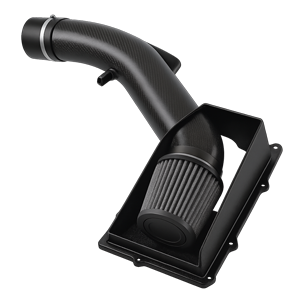
Mercedes performance responds well to thoughtful tuning, with strong factory engineering that leaves room for carefully planned upgrades. Software calibration can unlock a more eager power delivery and sharpen throttle response, especially when matched to freer-flowing intake and exhaust hardware that helps the engine breathe more efficiently.
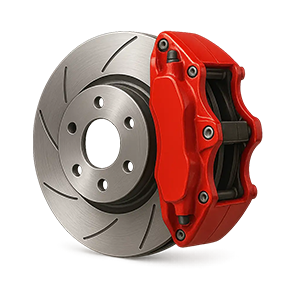
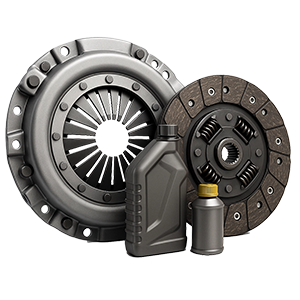
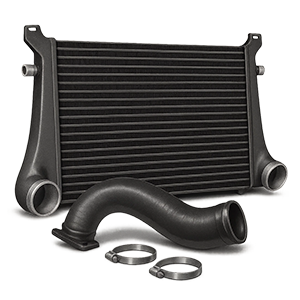
Beyond the engine, the real gains come from building a balanced package. Uprated cooling, brakes and suspension help the chassis keep up with the extra power, improving confidence and consistency on fast road or track. Many Mercedes platforms also benefit from drivetrain and gearbox refinements, tightening up response and making better use of the available performance without compromising the refined character that defines the brand.
Mercedes has treated performance as a proving ground for engineering ideas rather than a separate pursuit. From the early Grand Prix and endurance racing programmes to touring car battles and modern GT machinery, the brand has consistently used competition to test materials, combustion strategies and chassis concepts under real stress. Lessons from these programmes have fed back into road-going cars for decades, shaping everything from cylinder head design to brake cooling and gearbox durability in a way enthusiasts can feel on the road and track.
At the core of Mercedes performance engineering is a focus on sustained, repeatable capability rather than one-off figures. Engine development has typically prioritised broad torque delivery, thermal stability and long service life, with forced induction and valvetrain technologies refined over millions of kilometres of testing. The same approach runs through its approach to gearboxes, electronics and traction systems, where calibration and robustness are treated as seriously as outright speed.
Chassis engineering has followed a similar philosophy. Instead of chasing extreme stiffness alone, Mercedes has tended to balance structural rigidity with suspension compliance and precise geometry, aiming for stable, predictable behaviour at high speed. Multi-link rear axles, adaptive damping and carefully tuned steering systems are all examples of hardware developed with an eye on both Autobahn stability and circuit accuracy, giving keen drivers a car that remains composed when driven hard.
Many of the characteristics modern enthusiasts look for in a Mercedes trace back to these long-term decisions. The sense of effortless performance, the way a powerful engine remains calm at sustained speeds, and the confidence a well-sorted chassis inspires on challenging roads are all products of this engineering mindset. Rather than chasing trends, Mercedes has generally evolved its performance platforms gradually, which is why older high-output models still appeal today and newer ones feel like a continuation of a clear, technical lineage.