







Legendary Brands. Serious Performance.
For Lotus drivers, every upgrade is about feel, balance and precision rather than show. Here you’ll find performance parts chosen to complement the brand’s lightweight, driver-focused ethos across the full range. Confirm your exact Lotus, explore what’s available, and plan the next subtle step in sharpening your car.
Fast Delivery & UK Stock
Epic Reward Points
0% RACE NOW, PAY LATER™
Expert Advice & Workshop
Lotus attracts enthusiasts who see ownership as a long-term, iterative project. It’s about learning the car, understanding its responses and then tailoring it to personal taste while preserving that core analogue character. Common paths revolve around fine-tuning drivability, precision and usability for road and track, guided by a quietly perfectionist attitude that favours thoughtful, incremental improvements over instant, dramatic transformations.
Lotus styling mods usually lean into the car’s lightweight, purposeful look rather than trying to shout about it. Owners tend to refine the stance and proportions so the silhouette looks even more planted and balanced, keeping the clean, sculpted factory lines as the main focus rather than covering them up.
Colour and finish play a big role: motorsport-inspired accents, carefully chosen contrasts and subtle graphics that follow existing contours all help emphasise the car’s shape without overwhelming it. Inside, the same theme continues with minimalist, driver-focused personalisation that highlights the engineering rather than hiding it, delivering a discreet factory-plus feel that still looks completely at home on road or track.
Our related blog pieces explore Lotus engineering, tuning philosophies and real-world setup choices, offering context, technical insight and lessons learned from experience to help deepen your understanding of how and why these cars respond to thoughtful modification.



















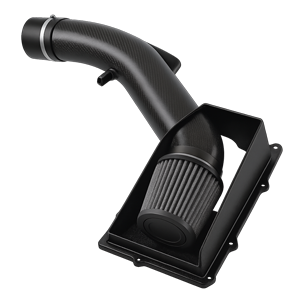
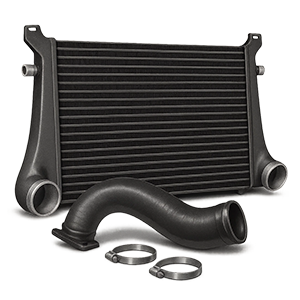
Lotus is all about balance, so meaningful performance gains come from enhancing the whole package rather than chasing headline numbers. Careful ECU calibration, breathing improvements and reduced restrictions can unlock extra response and drivability, especially when paired with sensible cooling and lubrication upgrades for consistent performance on road and track.
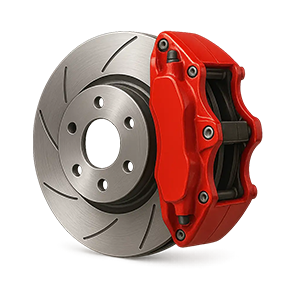
Because Lotus chassis are so capable, power increases should be matched with attention to tyres, brakes and suspension. Small, thoughtful steps often make the car feel markedly faster without losing the delicacy and feedback that define the brand. Done properly, upgrades work with the original engineering rather than fighting it, keeping that trademark precision intact.
Lotus has built its reputation around a clear, almost stubborn, commitment to lightweight construction and pure driving feel. From the earliest cars developed by Colin Chapman, the design brief prioritised low mass, sharp responses and efficient use of power, rather than chasing headline figures. This has given the brand a distinct place in performance culture, where chassis dynamics, steering feedback and driver involvement sit at the centre of the experience. Over time, Lotus has refined this philosophy rather than abandoning it, even as safety regulations and customer expectations have evolved.
Motorsport has always been a proving ground for Lotus engineering ideas. The brand’s time in top-level single-seater racing produced innovations in aerodynamics, suspension layout and materials that filtered straight into its road cars. Concepts like optimised weight distribution, carefully tuned compliance and efficient downforce were not marketing terms but tools to improve lap times. That motorsport-led approach continues to influence how Lotus sets up its cars, with a focus on predictable handling, progressive balance at the limit and a chassis that encourages confident, precise inputs.
Enthusiasts are still drawn to Lotus because so many of those early engineering decisions feel directly relevant today. In a world of ever-heavier performance cars, the emphasis on low mass and mechanical grip has fresh appeal for drivers who value feel over straight-line numbers. The core layout choices, such as mid-mounted powertrains in compact footprints and finely judged suspension geometry, give modern Lotus models a level of agility and connection that can make even modest power outputs feel genuinely exciting.
Underneath the recognisable styling, Lotus engineering tends to favour simplicity where possible and sophistication where it matters. Aluminium structures, carefully selected composite elements and minimalist interiors are typically used to keep weight down, while real effort goes into tuning bushings, steering racks and damper curves. The result is an engineering character that prioritises clarity: the driver is given accurate information through the chassis and controls, rather than layers of isolation. This clarity is part of what keeps older Lotus cars relevant and enjoyable, even as technology marches on.
Looking ahead, the brand’s philosophy of doing more with less remains a useful foundation, especially as electrification and new materials become mainstream. The same principles that once drove experiments in aerodynamics and packaging are now guiding how Lotus approaches battery placement, structural stiffness and energy efficiency. For enthusiasts, this means the name still signals a particular kind of performance mindset: one where engineering choices are made primarily to serve balance, feedback and that sense of being closely connected to the car.